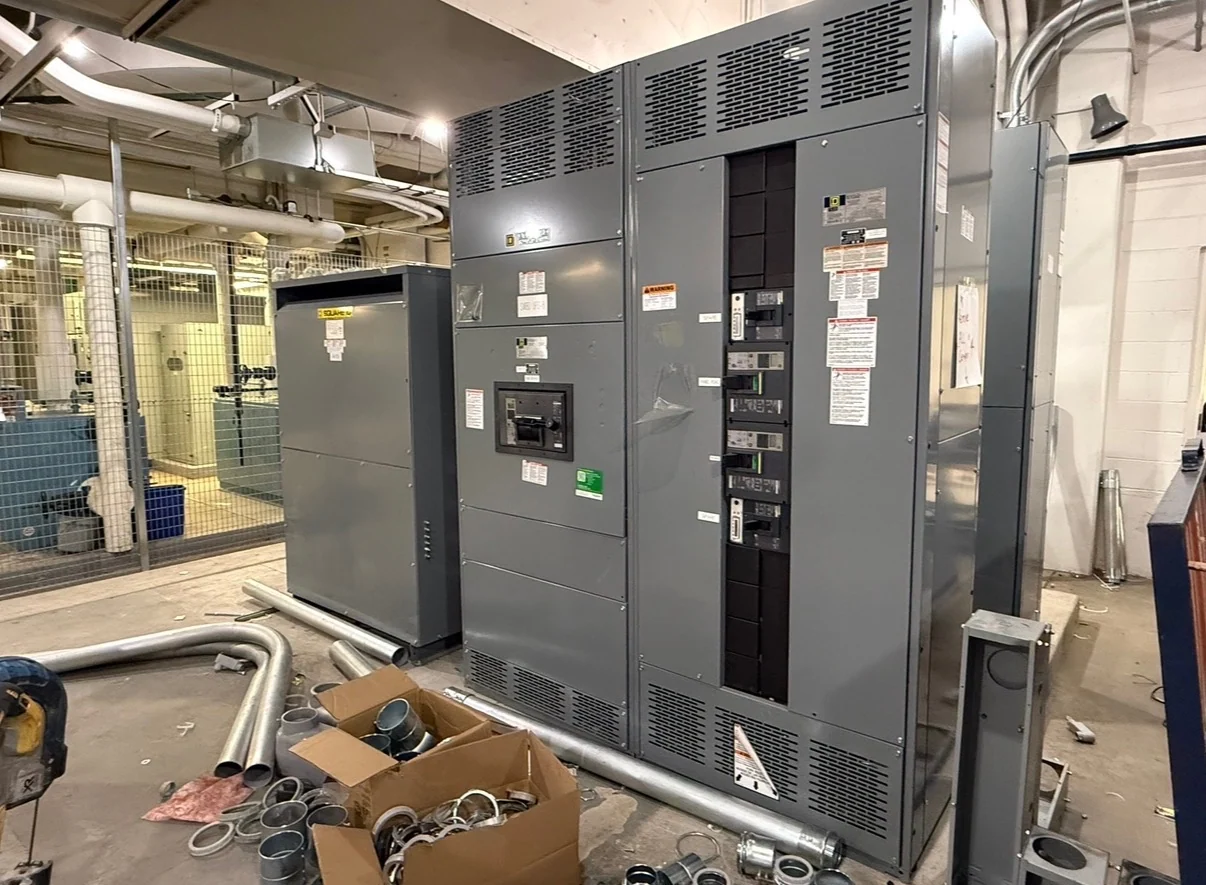
Start with the Santa Fe Project Conditions
A Santa Fe electrical distribution project should begin with the actual site and system data rather than a generic equipment label. Identify whether the industrial facility is served by a utility transformer, on-site generation, or another source arrangement; document nominal voltage, frequency, phase configuration, grounding method, load profile, and expansion plans. Elevation, seasonal weather exposure, indoor or outdoor placement, dust, moisture, and access constraints can all affect enclosure and installation decisions. Switchgear Builders manufactures new electrical switchgear in the United States, custom to specification, using American components and shipping nationwide. A useful inquiry should distinguish confirmed engineering requirements from assumptions that still need review.
Select the Medium-Voltage Class and Feeder Arrangement
Medium-voltage switchgear for industrial facility feeders must match the system voltage class and the intended operating duties. The design team should define incoming sources, transformer primary connections, feeder count, switching sequence, grounding provisions, and whether the lineup must accommodate sectionalizing or a bus-tie arrangement. Voltage class is not interchangeable with nominal system voltage, and a feeder's continuous current, interrupting duty, insulation coordination, and short-circuit withstand requirements require project calculations. A custom manufacturer can use the approved one-line diagram, equipment schedule, physical dimensions, and control narrative to develop a buildable configuration instead of treating Santa Fe switchgear as a standard regional product.
Coordinate Transformer Connections and Protection
Transformer connections should be reviewed alongside the medium-voltage lineup, because transformer impedance, primary and secondary ratings, inrush behavior, grounding, and downstream fault contribution influence protective-device selection. Industrial feeders may also serve motors, drives, process equipment, or distributed generation, creating different starting and fault conditions than a simple building service. Protective relaying requirements should identify sensing inputs, trip logic, communications, source interlocks, and the desired operating sequence. Engineers should provide coordination-study inputs and relay-setting responsibilities early, while the manufacturer confirms that the proposed physical assembly, wiring, terminals, and devices align with the approved design.
Evaluate Fault Duty and Installation Interfaces
Available fault current at the Santa Fe site is a design input, not a value that can be inferred from geography or facility type. The responsible electrical engineer should establish source contribution, transformer data, feeder lengths, grounding paths, motor contribution, and any generation or energy-storage contribution used in the study. The equipment specification should then state applicable short-circuit, interrupting, momentary, and withstand requirements for each relevant device or assembly. Physical coordination matters as well: cable entry, bending space, clearances, lifting points, anchorage, room access, ventilation, and the route from receiving area to the electrical room should be resolved before fabrication.
Build the Quote Package Around Approved Information
To request a practical quote for Santa Fe New Mexico switchgear, send the latest one-line diagram, site voltage and grounding information, feeder schedule, transformer data, fault-current study, protection and control narrative, enclosure environment, dimensions, cable details, metering needs, and documentation requirements. Include whether the project calls for witnessed testing, specific inspection points, spare provisions, shipping splits, or defined receiving responsibilities. If UL 891 is identified in the specification, its applicability and any listing or verification requirement must be confirmed for this particular assembly and project; it should not be assumed from a product description. Clear inputs reduce revisions and make commercial comparisons more meaningful.
Plan Delivery, Receiving, and Field Coordination
Nationwide shipping can support a Santa Fe project, but delivery planning remains project-specific. The purchaser, manufacturer, electrical contractor, and qualified rigging team should agree on lineup sections, weights, lifting provisions, packaging, freight terms, destination access, unloading equipment, storage conditions, and inspection at receipt. Field work should follow the approved installation documents and the authority having jurisdiction's requirements, with qualified personnel responsible for site safety, testing, energization, and final settings. A manufacturer-built package is only one part of a functioning distribution system; transformer interfaces, feeder terminations, relay coordination, grounding, and commissioning responsibilities need explicit ownership.