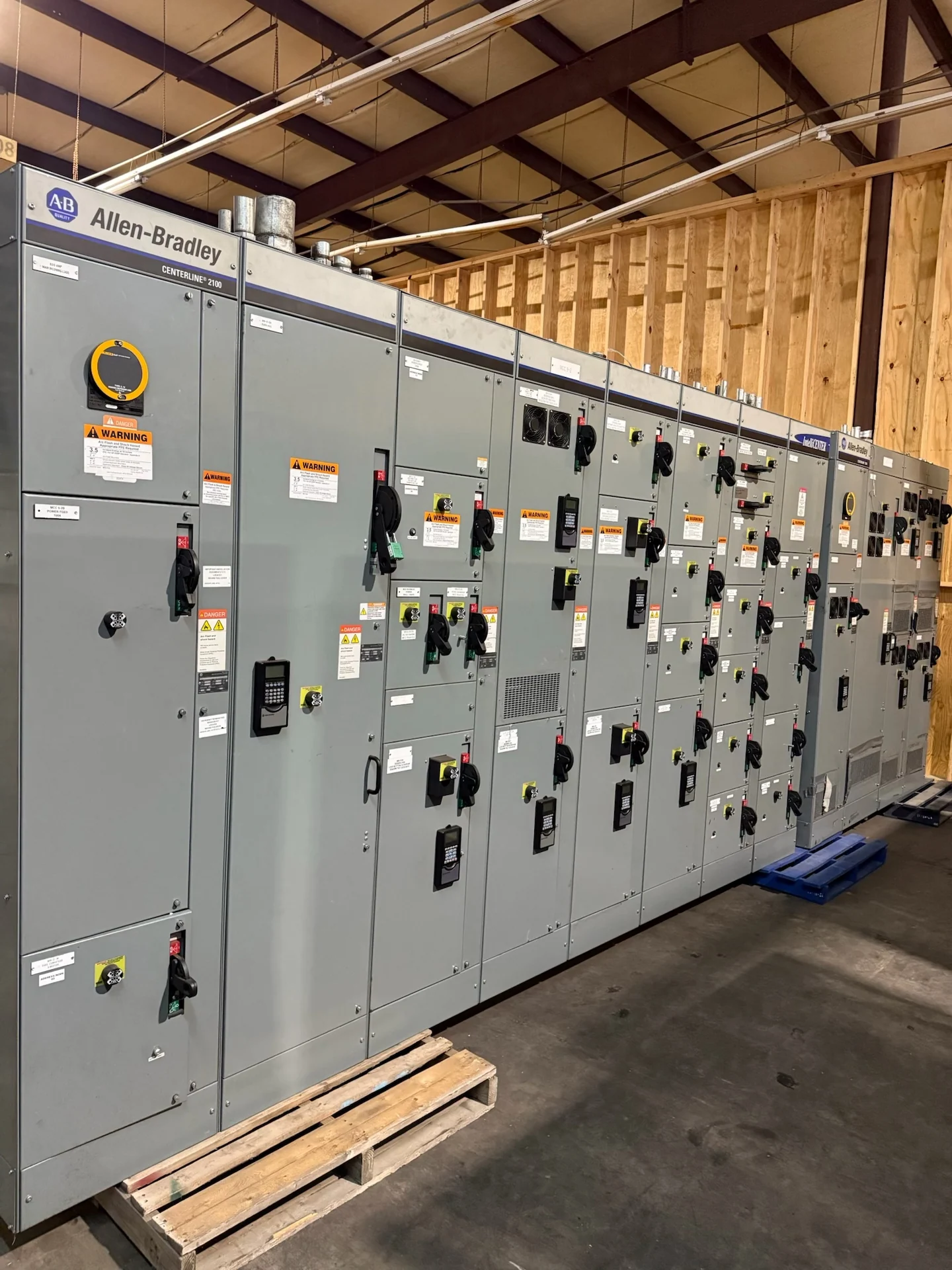
Plan the North Carolina Project Around Its Electrical Topology
A North Carolina data center project should define the electrical topology before anyone selects a switchgear lineup. Start with the utility service arrangement, incoming voltage, transformer interfaces, generator sources, transfer equipment, UPS distribution, downstream feeders, and the loads that must remain available during maintenance or an outage. A one-line diagram, preliminary load schedule, fault-current information, grounding approach, and site conditions give the manufacturer a workable basis for a custom new switchgear inquiry. The equipment can then be built to the project specification with American components and shipped nationwide, while the engineer and installer confirm the final design for the actual site.
Source Redundancy Requires a Defined Operating Sequence
Redundancy is more than adding a second source. The design team should state which source normally supplies each bus, whether sources may operate in parallel, how a bus tie is controlled, and what happens when a utility feeder, generator, transfer device, or distribution section is unavailable. Interlocks, permissives, breaker positions, control power, synchronizing requirements, and manual operating steps should be represented in the control narrative rather than left to interpretation. For a North Carolina facility, weather exposure and utility conditions may influence planning, but they do not replace project-specific calculations or the owner's required availability strategy.
Coordinate Generator Interfaces Before Fabrication
Generator interfaces deserve early coordination because they connect mechanical generation, automatic controls, protective devices, grounding, and the distribution lineup. Provide generator ratings, neutral and grounding details, short-circuit contributions, synchronization or paralleling requirements where applicable, transfer sequence, load-shed logic, and communications points. The switchgear builder also needs to know whether the lineup receives generator feeders, distributes emergency loads, or connects through separate transfer equipment. These inputs help establish bus sections, device functions, control wiring, metering provisions, and testing expectations without assuming a particular generator arrangement or promising a feature before engineering review.
Design for Maintenance Access and Phased Work
Data-center maintenance planning should shape the physical and electrical arrangement from the beginning. Review working clearances, door and panel swing, cable-entry direction, lifting and movement paths, removable-device access, service points, ventilation, housekeeping pads, and the space needed to isolate one section while other sources remain available. A phased North Carolina installation may also require shipping splits, temporary operating states, outage boundaries, and a clear responsibility matrix among the owner, engineer, electrical contractor, controls team, and qualified commissioning personnel. Drawings should show these interfaces so field conditions do not force late changes.
Protective Coordination and Fault Duty Inputs
Protective coordination begins with reliable system inputs, not with a preferred breaker brand or a generic lineup. The project should identify available fault current at each relevant bus, utility and generator operating cases, transformer impedance, conductor data, device interrupting requirements, short-circuit withstand expectations, ground-fault approach, and the study assumptions governing time-current settings. Coordination with downstream UPS, transformer, motor, and feeder protection may expose trade-offs between selectivity, clearing time, arc-flash considerations, and ride-through behavior. The manufacturer can incorporate specified devices and settings into a new assembly after the responsible engineer confirms the study basis.
Prepare a Complete Manufacturer Quote Package
A useful request for North Carolina switchgear should include the one-line diagram, equipment schedule, voltage and frequency, phase and wire configuration, continuous-current requirements, fault-duty data, enclosure environment, dimensions, cable entry, control voltage, metering, communications, source-transfer narrative, required drawings, inspection points, and shipping destination. Identify whether the equipment serves a new data center, expansion, or replacement interface, and explain site access, receiving constraints, and desired project milestones. Switchgear Builders manufactures new custom electrical switchgear in the United States, uses American components, and supplies projects with nationwide shipping; project-specific scope, applicability of standards, and commercial details must still be confirmed.