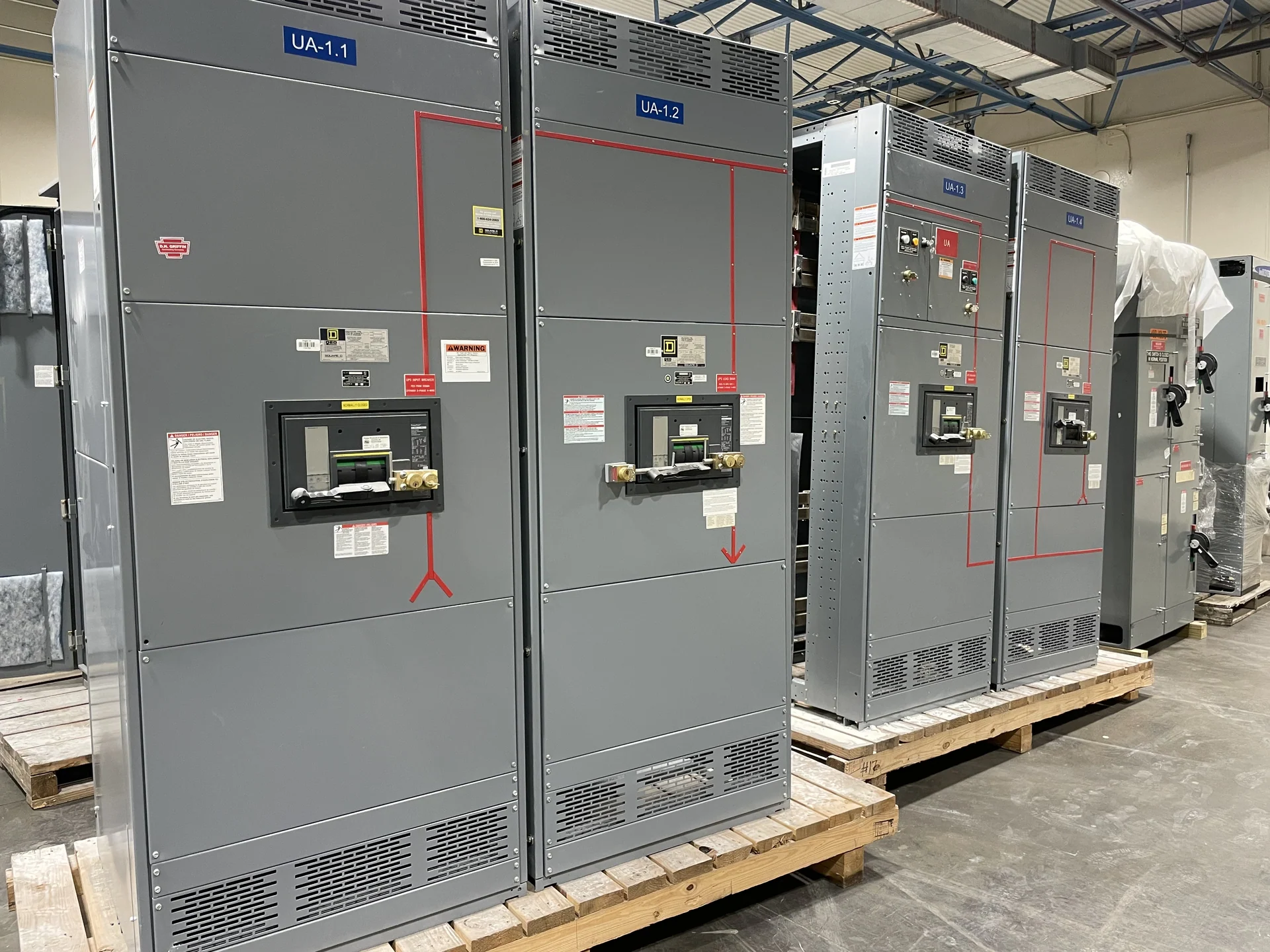
Start with the Raleigh Industrial Load Profile
An industrial motor control center for a Raleigh, North Carolina project should begin with the loads it will serve, not with a preferred enclosure or starter catalog. List each pump, conveyor, fan, mixer, compressor, and process machine; record motor horsepower, voltage, phase, full-load current, starting method, duty cycle, and whether operation is continuous or intermittent. Separate critical process loads from ordinary production loads, then identify normal and alternate sources if applicable. This load schedule gives the electrical engineer and manufacturer a defensible basis for feeder sizing, device selection, lineup arrangement, and future-space decisions before a customer requests a project-specific quote.
Choose Starters, Drives, and Protection by Function
Across-the-line starters may suit some motors, while reduced-voltage starters or variable frequency drives may better fit equipment that needs controlled acceleration, speed adjustment, or lower mechanical stress. The choice affects heat dissipation, harmonic considerations, bypass arrangements, disconnecting means, overload protection, and maintenance access. Specify how each motor is expected to start, stop, reverse, or respond to an interlock rather than treating every bucket as interchangeable. Protection should also reflect motor characteristics and the upstream distribution design. A custom builder can use this functional information to coordinate new motor control center sections with the intended process sequence.
Define the Control Interface Before Fabrication
Control details often determine whether an industrial motor control center integrates cleanly with a plant automation system. Identify local pushbuttons, remote commands, permissives, emergency-stop circuits, run feedback, fault indication, speed references, and reset behavior. State whether signals are hardwired, networked, or split between both approaches, and provide the preferred terminal, communication, and labeling conventions. For pumps and conveyors, document level, pressure, flow, jam, belt, or downstream-equipment interlocks as applicable to the process. A written cause-and-effect sequence prevents assumptions and helps the manufacturer coordinate control wiring, device interfaces, and drawings with the responsible engineer and installer.
Coordinate Physical and Environmental Requirements
The available room and installation path can be as important as the electrical schedule. Provide the intended lineup footprint, working clearances, cable-entry direction, feeder routing, ceiling height, door or hatch dimensions, lifting limits, and any split points needed for movement into the facility. Describe indoor or outdoor exposure, dust, moisture, corrosive process conditions, ambient temperature, ventilation, and washdown expectations so enclosure and heat-management decisions receive proper engineering review. Include the planned anchorage and housekeeping-pad information when relevant. These inputs allow a new custom assembly to be designed around the Raleigh site interface and coordinated with the responsible installation team.
Build a Complete Technical Inquiry
A useful inquiry for new motor control centers should include the one-line diagram, motor schedule, control schematics, sequence of operations, available fault-current information, system voltage and frequency, grounding arrangement, enclosure conditions, dimensions, and preferred documentation. Identify spare sections, spare bucket space, metering, communications, bypass needs, and provisions for future motors only when they are genuine project requirements. Also state the division of responsibility for line-side and load-side terminations, field wiring, programming, testing, and installation. Switchgear Builders manufactures and builds new electrical distribution equipment in the United States to customer specifications, using American components and offering nationwide shipping; project details determine the actual scope.
Plan Review, Delivery, and Site Integration
Before ordering, have the project team review layout drawings, feeder identification, device ratings, control logic, terminal schedules, and interface points against the approved design. Agree on the inspection and test records required for the equipment package, while keeping acceptance criteria specific to the project. For shipment to Raleigh, confirm the destination, receiving hours, unloading method, rigging responsibility, shipping splits, lifting points, packaging, and path from truck to the electrical room. The manufacturer can coordinate a nationwide shipment of the new assembly, but site readiness, qualified installation, field connections, and final commissioning remain matters for the project’s responsible professionals.