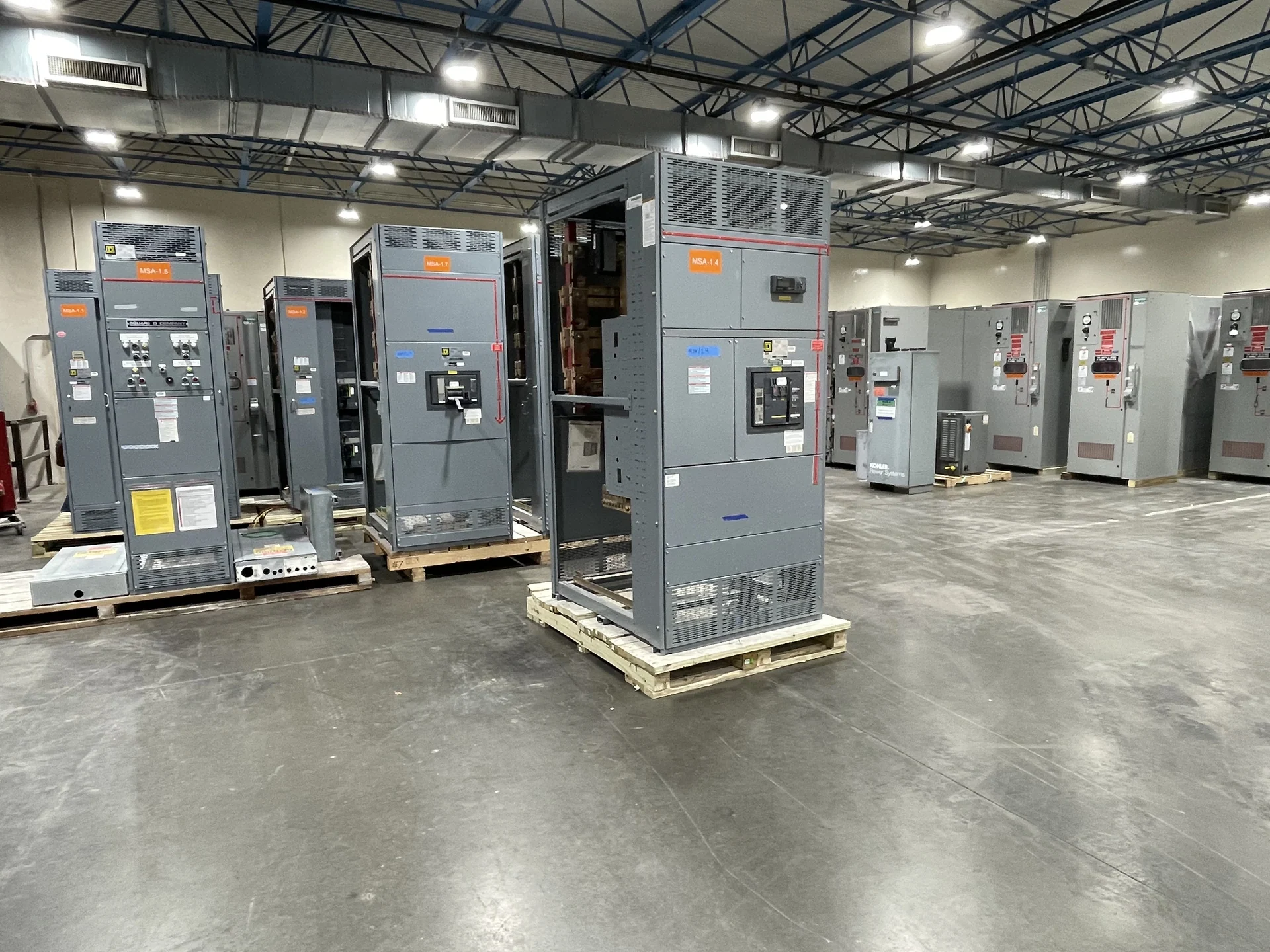
Planning Charlotte Water-Treatment Distribution
A Charlotte water-treatment project may combine incoming service equipment, process feeders, motor control centers, variable frequency drives, instrumentation, and standby-source interfaces. The right electrical distribution arrangement depends on the treatment process, motor inventory, operating sequence, available fault current, environmental exposure, and the facility’s maintenance plan. Switchgear Builders manufactures new electrical switchgear in the United States and can develop custom equipment to a project specification, using American components and arranging nationwide shipping. A useful inquiry starts with the one-line diagram, load schedule, system voltage, phase and frequency, grounding method, fault study inputs, enclosure location, and required control interfaces rather than relying on a city-based product assumption.
Motor Control Center Architecture
Motor control centers for water treatment pumps and process equipment should be organized around actual motor duties and the sequence in which equipment operates. Identify each motor’s horsepower, voltage, starting method, duty cycle, feeder protection, local disconnect needs, and control source. Grouping decisions can affect cable routing, heat within the lineup, access for maintenance, and the ability to isolate one process area while other loads remain energized. A custom builder can coordinate starter sections, feeder sections, spare provisions, metering, terminal points, and network connections after the engineer establishes the required arrangement and applicable project standards.
Motor Starting and Drive Selection
Pump motor starting deserves more than a nameplate check. Across-the-line starting can impose a substantial inrush and voltage disturbance, while reduced-voltage starters or variable frequency drives may change acceleration, control resolution, harmonics, heat dissipation, and bypass requirements. Compare the pump curve, minimum and maximum operating speeds, torque profile, restart behavior, emergency operation, and upstream short-circuit duty before selecting a method. For drives, define input and output ratings, enclosure ventilation, harmonic mitigation expectations, keypad or remote control location, communications, and whether a bypass or maintenance mode is required. These choices should be reviewed with the electrical engineer and process controls team.
Environmental and Enclosure Questions
Water and wastewater facilities can expose electrical assemblies to moisture, condensation, washdown, chemicals, corrosion, temperature changes, and airborne contaminants. The equipment location matters: an electrically controlled room, process building, covered exterior area, and open outdoor installation present different enclosure and ventilation questions. Document the intended installation environment, ingress or enclosure requirements, altitude if relevant, sunlight exposure, cable-entry direction, housekeeping pads, clearances, and access path. Select the enclosure for the installation environment; confirm the applicable environmental standard, materials, finish, drainage, heaters, filters, and cooling approach for the Charlotte-area site and its operating conditions.
Controls, Interlocks, and Documentation
Pump stations and treatment processes often depend on dependable control signals between motor sections, level instruments, valves, remote supervisory systems, and upstream distribution equipment. Define whether each command is local, remote, automatic, or manual; identify permissives, trips, alarm contacts, interlocks, HOA functions, emergency stops, and loss-of-communication behavior. Provide an I/O list, sequence of operations, network protocol, terminal schedule, and preferred labeling conventions for review. The equipment package can then align control wiring, terminals, protective devices, drive interfaces, and drawings with the approved design. Factory inspection and electrical or functional checks should use acceptance criteria agreed before production.
A Practical New-Equipment Quote Package
For a new Charlotte switchgear or motor-control inquiry, send the latest one-line diagram, equipment schedule, site and room information, motor list, fault-current data, control narrative, layout constraints, utility or owner requirements, desired documentation, and shipping destination. Include whether installation will be phased, how sections will enter the building, and which party handles unloading and final connections. Switchgear Builders can review a custom scope for manufacture in the United States with American components and nationwide shipping, while ratings, configuration, applicable standards, and any UL 891 requirement remain subject to project-specific confirmation. A clear package reduces redesign caused by missing interfaces and makes quote comparisons more meaningful.