Plan the Oklahoma Service Entrance Around the Utility Interface
An Oklahoma commercial or industrial project starts with a service-entrance switchboard specification that matches the serving utility's interface and the facility's calculated demand. Confirm the service voltage, phase and wire arrangement, grounding method, metering position, service disconnecting means, available fault current, and required number of feeder circuits before requesting a manufacturer quote. Utility rules, the project engineer's design, and the authority having jurisdiction can each affect the arrangement. A clear one-line diagram, site information, and equipment-room dimensions give the builder useful context without treating a generic Oklahoma switchgear description as a finished design.
Define Main and Feeder Protection
Service-entrance switchboards should be organized around the actual load schedule rather than a nominal ampere label alone. Identify the main device, feeder devices, continuous loads, motor starting demands, future circuits, conductor sizes, and each device's interrupting or short-circuit rating as applicable. The available fault current at the service affects equipment selection and protective-device coordination, while selective coordination goals may influence trip units, fuses, or settings. For an industrial facility, document large motors, process loads, and any source changes; for a commercial building, separate tenant, life-safety, mechanical, and general distribution requirements where the design calls for it.
Coordinate Metering, Disconnects, and Physical Layout
Metering provisions need early coordination because utility equipment, instrument compartments, barriers, access, and conductor routing can change the switchboard footprint. Ask the project team to identify utility meter requirements, sealable spaces, service disconnect access, incoming cable direction, feeder exits, and working clearances. Confirm how sections will move into the Oklahoma site, including doorways, turning space, floor conditions, lifting points, and the final lineup location. A custom manufacturer can build around documented dimensions and interfaces, but field measurements, installation drawings, and the engineer's approval remain essential before fabrication.
Choose a Custom Manufacturer for the Equipment Scope
Switchgear Builders manufactures new electrical switchgear in the United States and can develop a custom equipment scope from project drawings, ratings, control requirements, and installation constraints. American components can be specified where they fit the approved design and procurement requirements; component origin should be confirmed for the particular bill of material rather than assumed for every item. When comparing an Oklahoma switchgear supplier or manufacturer, ask for a defined lineup description, device schedules, enclosure details, drawings, testing scope, documentation, and commercial inclusions. This approach compares equivalent new equipment instead of vague product categories or unsupported capability claims.
Prepare a Complete Quote Request
A useful quote request should include the project location in Oklahoma, application, one-line diagram, load summary, service voltage, frequency, phase, grounding arrangement, continuous-current requirement, available fault current, main and feeder device schedule, metering instructions, enclosure environment, dimensions, cable-entry preferences, control wiring, and requested documentation. State whether the lineup is for a new service, an expansion, or a replacement interface, and identify the engineer, installer, utility contact, and approval sequence. Also request confirmation of manufacturing scope, shipping terms, packaging, and project-specific delivery estimates rather than assuming inventory or a standard schedule.
Coordinate Delivery and Site Readiness
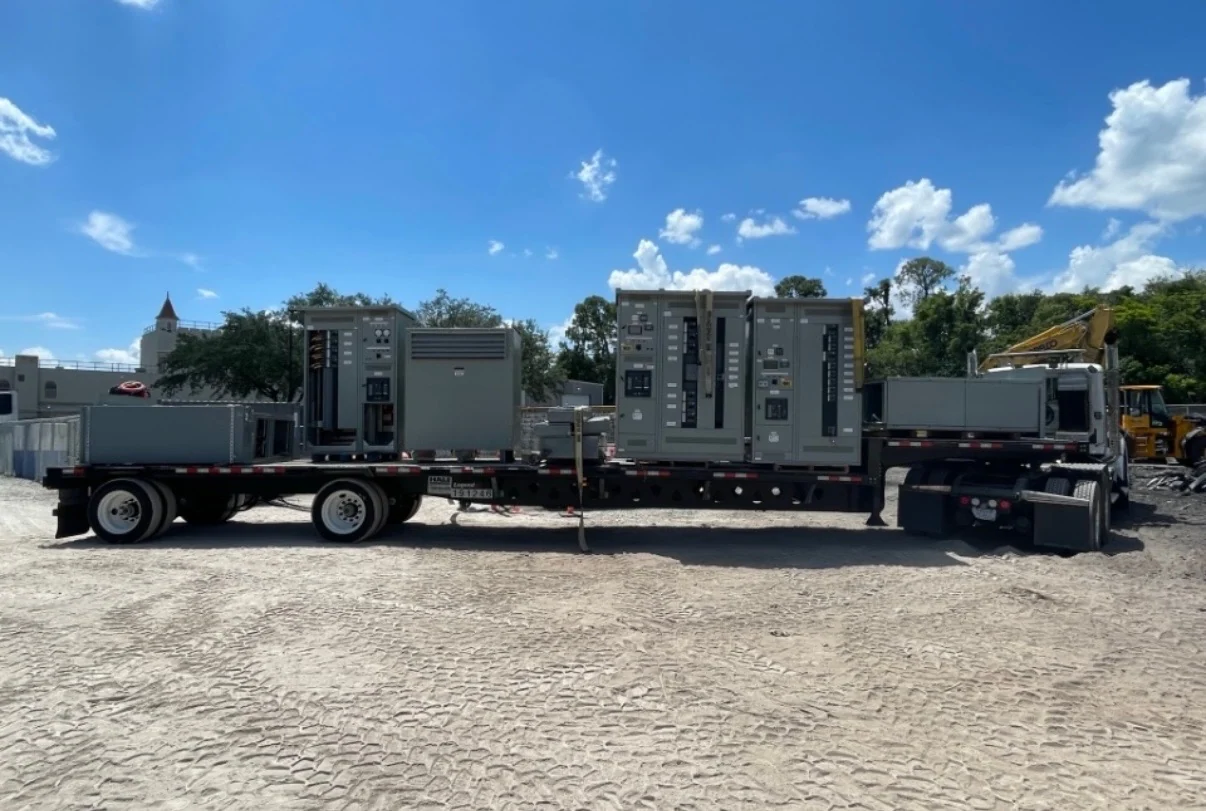
Nationwide shipping can support an Oklahoma destination, but delivery planning belongs in the project schedule and should be confirmed for the specific order. Coordinate shipping splits, section weights, lifting provisions, packaging, receiving inspection, storage conditions, rigging responsibility, and the path from the truck to the electrical room. Before shipment, verify approved drawings, device labels, feeder terminations, meter interfaces, and required test records. On site, a qualified electrical team should confirm clearances, anchorage, grounding and bonding, conductor preparation, utility requirements, and commissioning steps under the approved design and applicable local requirements.