Plan the Distribution Scope
A commercial building project in Sioux Falls should begin with a clear description of how power enters, branches through, and serves the facility. A low-voltage switchgear lineup may organize the service main, feeder overcurrent protection, metering provisions, and distribution connections, but the correct arrangement depends on the engineer's one-line diagram and the utility interface. Identify the nominal voltage, phase and wire configuration, service or feeder role, calculated demand, continuous loads, available fault current, and any planned expansion. Those inputs give the manufacturer a practical electrical and physical basis for building new switchgear custom to the project.
Match Service Ratings to the Building
Service ratings should reflect calculated load and the equipment's intended duty, not simply the largest frame that fits a schedule. Review the main device rating, bus capacity, feeder ratings, interrupting or short-circuit requirements, and coordination with upstream utility equipment and downstream panelboards. Commercial properties can combine lighting, receptacles, HVAC, elevators, pumps, kitchens, tenant spaces, and electric vehicle infrastructure, each with different load behavior and growth assumptions. A qualified electrical engineer should confirm demand calculations and protection settings, while the manufacturer uses approved drawings to configure the new lineup. Allowing space or provisions for defined future feeders can be useful, but every provision should be described explicitly in the quote and drawings.
Coordinate Feeder Protection
Feeder protection connects the switchgear design to the building's operating objectives. Compare each feeder's calculated load with conductor ampacity, protective-device rating, available fault current, and the time-current behavior needed for coordination. Main-tie-main or other source arrangements require an agreed operating sequence and interlocking concept; they should not be selected from a generic commercial template. Metering, shunt trips, undervoltage releases, communications, and alarm contacts also affect control wiring and testing requirements. Provide the manufacturer with the latest one-line diagram, feeder schedule, protection study inputs, control schematic expectations, and device data so discrepancies can be resolved before fabrication.
Fit the Equipment Room
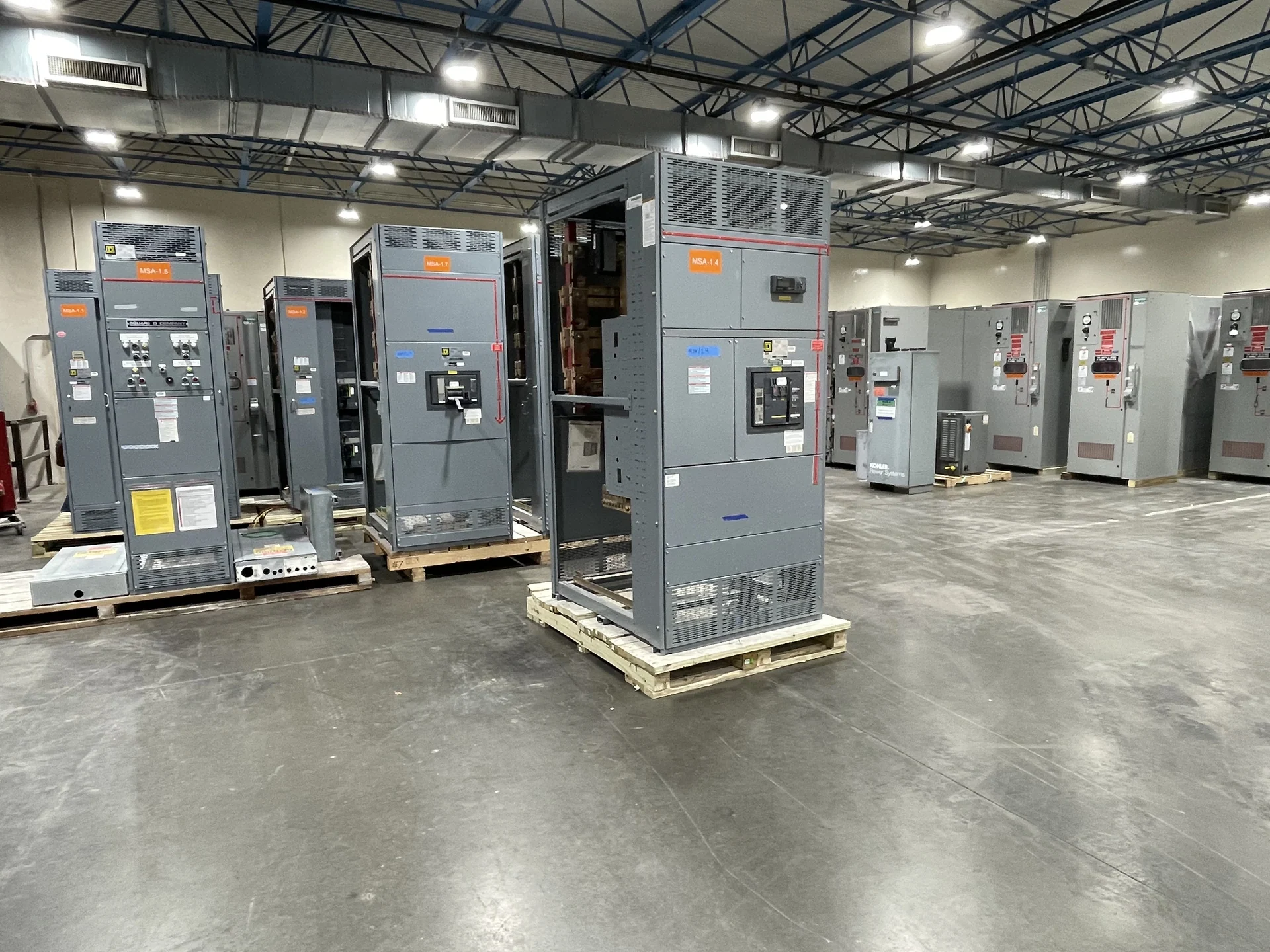
Physical planning is especially important when a Sioux Falls commercial building has a constrained electrical room, a phased construction plan, or a difficult route from receiving to the final room. Confirm lineup dimensions, door swings, working space, cable entry, bending space, ventilation needs, maintenance access, and the path for moving each shipping section. Coordinate housekeeping pads, anchorage, sleeves, housekeeping penetrations, and overhead obstructions with the structural and electrical drawings. The building team should also identify who will receive, unload, set, connect, and inspect the equipment. A manufacturer can review the requested enclosure layout and shipping split, while site-specific installation decisions remain with the responsible design and construction professionals.
Build Custom Equipment for the Project
Switchgear Builders manufactures new electrical switchgear in the United States, builds custom equipment to specification, uses American components, and supplies projects with nationwide shipping. The proposed equipment should be coordinated with the electrical design and delivery requirements for the Sioux Falls project. For a useful quotation, submit the approved one-line diagram, schedules, physical constraints, environmental conditions, required devices, control sequence, documentation expectations, destination, and desired commercial terms. The quotation should identify assumptions, exclusions, shipping responsibilities, and the drawings or reviews required before release to production. Any project-specific listing, certification, or standard requirement must be confirmed for the exact configuration.
Review Delivery and Installation Inputs
Nationwide shipping makes destination planning part of the equipment conversation for a Sioux Falls job, even when the design work is coordinated remotely. Confirm the delivery address, receiving hours, site contact, unloading method, access restrictions, freight responsibilities, and whether the lineup will ship as one assembly or multiple sections. Before energization, the installing team should compare received equipment with approved drawings, inspect for shipping damage, verify field connections, and complete the project-defined checks and tests. The engineer, contractor, owner, and manufacturer should agree on documentation, witness requirements, acceptance records, and any project-specific commercial and delivery terms.