Start with the Healthcare Load Profile
A healthcare backup-power project in Sioux Falls should begin with a documented load profile rather than a preferred equipment name. Identify the essential electrical systems, life-safety loads, clinical areas, refrigeration, information technology, ventilation, pumps, and other functions that must remain available during a utility interruption. Separate loads by required priority and operating behavior, including motor starting, nonlinear current, inrush, and continuous demand. The design team should also record normal and emergency source voltages, phase arrangement, frequency, grounding method, available fault current, and expected future expansion. Those inputs give a manufacturer a usable basis for developing new custom switchgear and related distribution interfaces.
Define the Transfer Sequence
Transfer equipment is only useful when its operating sequence matches the facility's electrical design and clinical priorities. Document how normal and emergency sources are monitored, when a transfer is initiated, which loads transfer together, and how retransfer occurs after normal power returns. A project may require open-transition operation, delayed transitions, source interlocking, bypass arrangements, or coordination with generator controls, but those choices depend on the engineer's study and applicable healthcare requirements. Show the sequence on control schematics and identify manual controls, alarms, remote indications, and test interfaces. The manufacturer can then build the new switchgear around an agreed control narrative instead of guessing at field intent.
Coordinate Distribution and Protection
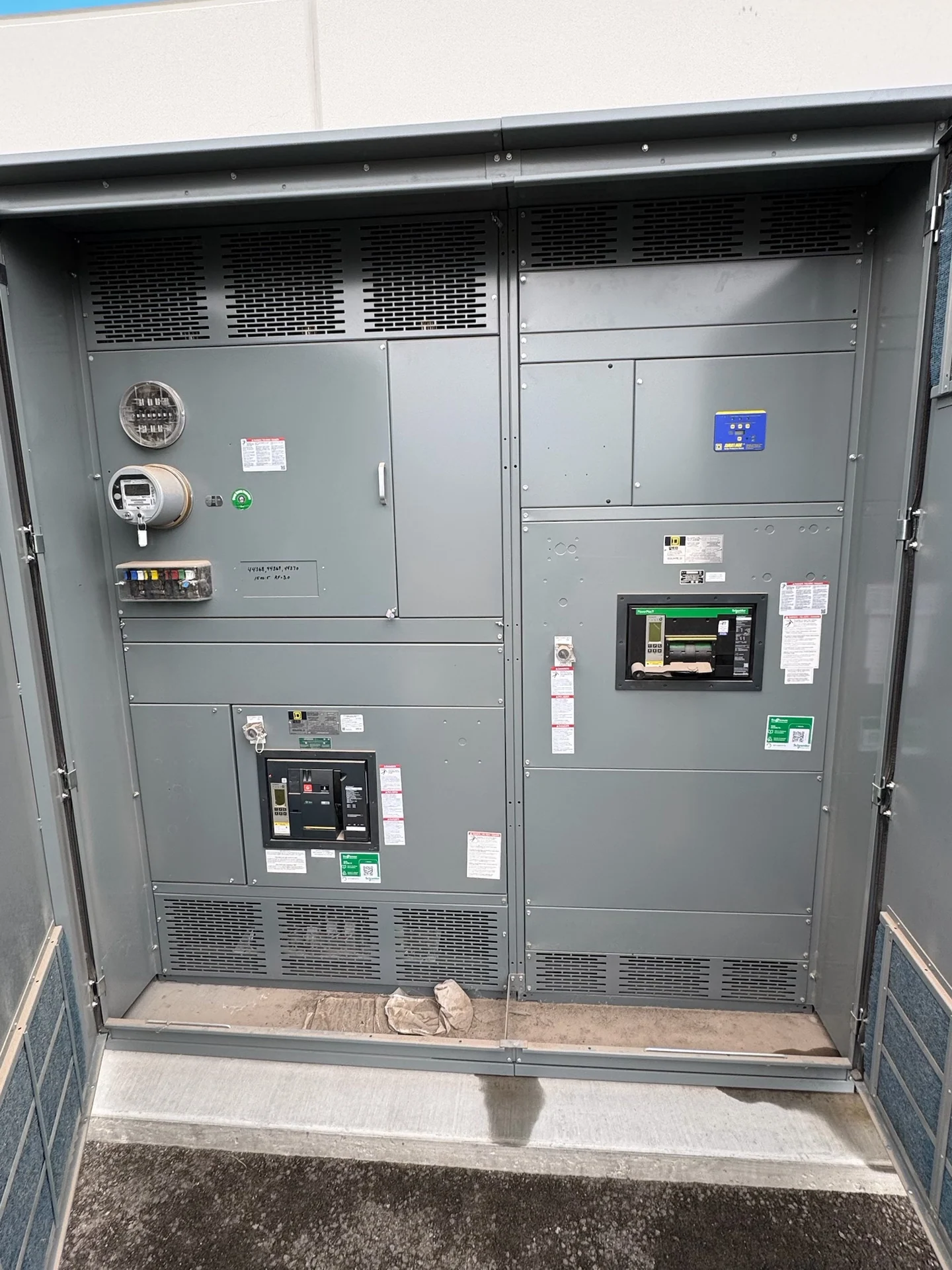
Backup power distribution should be reviewed as a connected system, not as an isolated lineup. Compare the generator contribution, utility fault level, transformer characteristics, feeder lengths, motor loads, and downstream protective devices. Protective coordination may require selective settings, a defined short-circuit current rating, ground-fault functions, or dedicated emergency feeders, subject to the engineer's calculations and project requirements. Confirm whether the equipment is switchgear, switchboard, transfer equipment, or a combination of separately specified assemblies; terminology affects the design discussion and documentation. If UL 891 is relevant to a particular assembly, its applicability and any project-specific listing or construction requirements must be confirmed before finalizing the specification.
Plan the Existing-Facility Interface
Healthcare work frequently occurs around occupied spaces, existing feeders, and limited outage opportunities, so the inquiry should describe the physical and operational interface clearly. Provide available one-line diagrams, equipment schedules, room dimensions, cable-entry direction, bus or feeder connections, working clearances, rigging access, and the planned isolation boundaries. Note whether the project is a new distribution section, an expansion, or a replacement within an existing arrangement, while leaving final compatibility to engineering review. A field-verified survey can reveal door swing conflicts, elevation changes, conduit congestion, or missing nameplate data before drawings are released. These details help a U.S. manufacturer develop practical custom equipment and shipping sections.
Prepare a Complete Manufacturer Inquiry
A useful request for new healthcare backup power switchgear should include the project location, one-line diagram, load schedule, source information, fault-current study inputs, enclosure environment, dimensions, control narrative, metering needs, communications requirements, and desired documentation. State the responsibilities of the engineer, electrical contractor, facility representative, and equipment manufacturer so assumptions do not become scope gaps. Ask for a written description of included devices, drawings, inspection points, tests, shipping split, lifting provisions, and exclusions. Switchgear Builders manufactures new electrical switchgear in the United States, builds custom to specification, uses American components, and supplies equipment with nationwide shipping; project-specific scope still requires review and confirmation.
Coordinate Delivery and Commissioning
Delivery planning should connect the equipment design to the receiving and installation plan. Confirm the destination, unloading route, floor capacity, equipment section weights, lifting points, storage conditions, weather protection, and responsibility for moving each section into position. Before energization, the qualified project team should compare approved drawings with the installed lineup, verify terminations and grounding, perform the checks defined by the project test plan, and document control operation and transfer behavior. Commissioning should include the facility's representatives and the responsible electrical professionals, with outage and life-safety procedures established in advance. Nationwide shipping supports U.S. project coordination, but transit details, site readiness, and acceptance criteria remain project-specific.