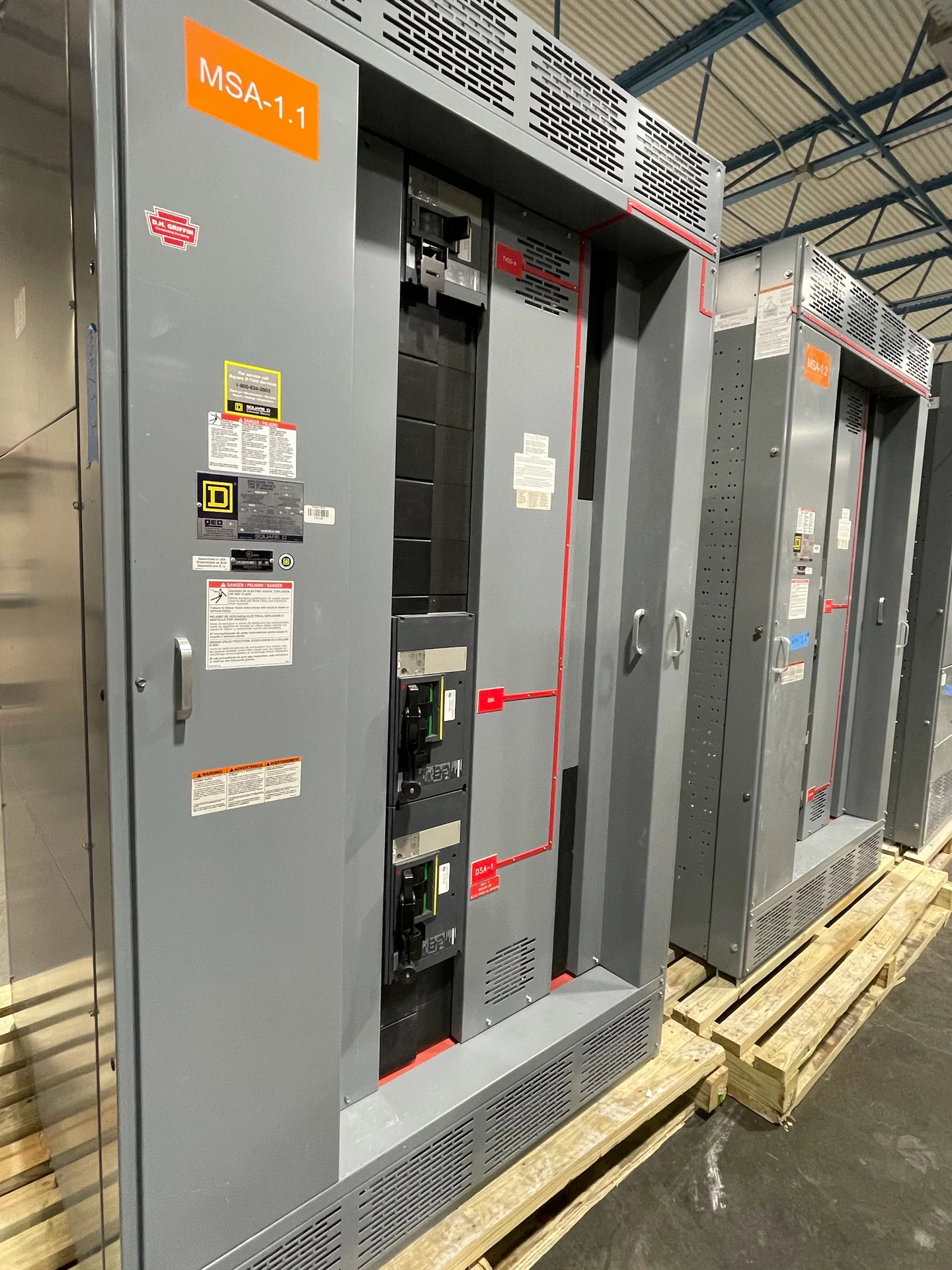
Start with the electrical system, not the label
The useful distinction between low-voltage and medium-voltage switchgear begins with the electrical system the equipment must serve. Low-voltage assemblies commonly distribute power on the load side of a transformer, while medium-voltage equipment is selected for distribution at a higher voltage class, often between a utility service and one or more transformers. The boundary is not a universal substitute for an engineered specification: nominal system voltage, grounding method, frequency, phase arrangement, available fault current, load profile, and the governing project requirements all need to be established before choosing equipment. A one-line diagram and site conditions provide a much better starting point than a product name alone.
Compare ratings and insulation requirements
Voltage class affects more than the number printed on a nameplate. For either category, the continuous-current rating must accommodate calculated load and any deliberately planned growth, while each protective device needs an interrupting or withstand capability appropriate to the available fault duty. Medium-voltage designs also require closer attention to insulation coordination, clearances, cable terminations, impulse withstand where applicable, and the relationship between system grounding and equipment construction. Low-voltage lineups still demand careful bus bracing, enclosure selection, short-circuit current rating, and device coordination. The final specification should distinguish nominal voltage from equipment voltage class and identify the values an engineer has actually calculated.
Protection and operating arrangements
Protection philosophy often separates a simple comparison from a workable design. Low-voltage switchgear may use molded-case or power circuit breakers, electronic trip units, metering, and main-tie-main arrangements when the distribution plan calls for them. Medium-voltage switchgear may use fuses, load-interrupter switches, vacuum interrupters, instrument transformers, relays, and feeder breakers depending on the source, transformer, and coordination study. In both cases, selectivity, grounding-fault response, source interlocking, arc-flash objectives, and the operating sequence deserve review. Protective settings cannot be chosen responsibly from voltage alone; they depend on the complete distribution model and the equipment interfaces around it.
Physical layout and installation interfaces
The practical installation differences can be just as important as electrical ratings. Low-voltage equipment is often planned around feeder routing, breaker access, cable bending space, working clearances, and room entry. Medium-voltage equipment adds concerns such as termination compartments, shielded cable interfaces, phase spacing, barriers, grounding points, switching access, and the sequence for connecting or isolating feeders. Indoor and outdoor applications introduce different enclosure and environmental questions for either voltage class. Before fabrication, confirm lineup dimensions, shipping splits, lifting provisions, foundation or housekeeping-pad interfaces, conduit locations, ventilation, maintenance paths, and the responsibilities of the electrical contractor and qualified installer.
Maintenance, testing, and documentation
Maintenance planning should influence the selection before the lineup is built. Ask how operators will inspect compartments, exercise switching devices, verify control circuits, access terminations, and isolate a section for planned work. Medium-voltage maintenance commonly places greater emphasis on cable and insulation condition, grounding equipment, switching procedures, and documented test practices, while low-voltage maintenance may center on breaker mechanisms, trip units, bus joints, control power, and thermal or visual inspection. The project package should define drawings, device data, wiring diagrams, labels, test points, acceptance criteria, and records. Any test plan, witness activity, or maintenance instruction must be agreed for the specific assembly rather than assumed from its voltage category.
Specify the right new equipment package
A sound comparison ends with a complete request for a new custom-built package, not a generic request for low-voltage or medium-voltage gear. Provide the one-line diagram, nominal and maximum system voltage, current and fault-duty calculations, phase and frequency, grounding method, source and feeder details, protective-device preferences, controls, metering, enclosure environment, dimensions, cable entry, room constraints, shipping destination, and required documentation. Switchgear Builders manufactures new electrical switchgear in the United States, custom to project specifications, with American components and nationwide shipping. The manufacturer and project engineer should confirm the applicable standards, construction details, and whether UL 891 applies to the particular assembly; no category label by itself establishes a listing or approval.