Define commissioning responsibility before delivery
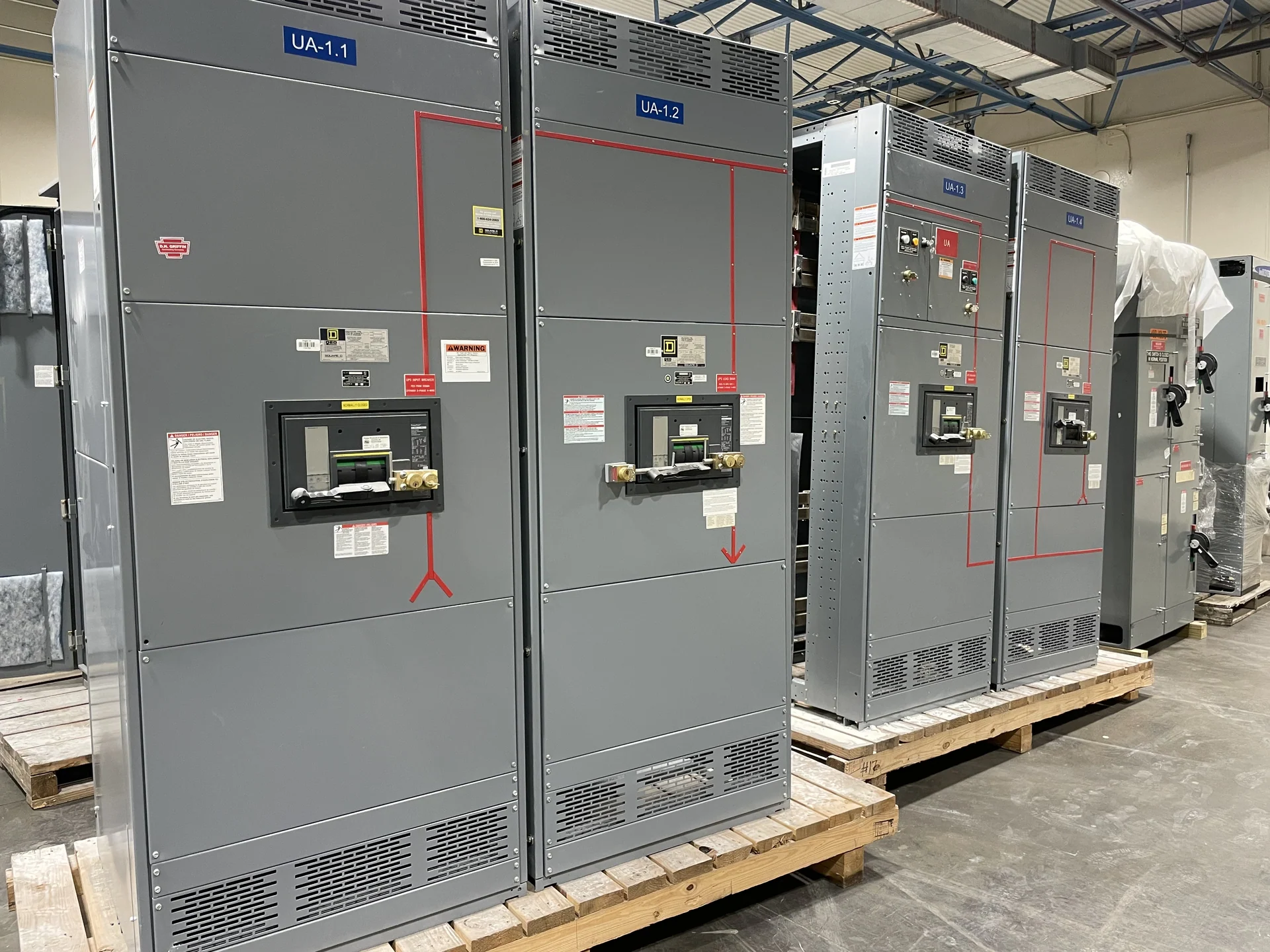
Switchgear commissioning planning should begin while the equipment package is being defined, not when the lineup reaches the electrical room. The owner, engineer, manufacturer, electrical contractor, testing organization, and utility or authority having jurisdiction may each control different decisions. Establish who approves settings, witnesses tests, supplies temporary power, verifies installation, and authorizes energization. Switchgear Builders manufactures new custom electrical switchgear in the United States, using American components and nationwide shipping, so a quote request should identify the commissioning documents and coordination responsibilities expected with the equipment package.
Build a project-specific pre-energization checklist
A useful pre-energization checklist follows the actual assembly and installation rather than relying on a generic sign-off sheet. Confirm that the lineup matches approved drawings, sections are anchored, barriers and covers are in place, doors operate correctly, labels are installed, and shipping damage has been evaluated. Check conductor terminations, bus joints, grounding and bonding, control-power sources, CT and PT circuits where applicable, cable identification, ventilation, working clearances, and access. The responsible engineer should define acceptance criteria and address site requirements before any source is closed.
Plan electrical tests and preserve traceable records
Commissioning records should connect each test to a specific section, device, circuit, drawing revision, instrument, and person performing the work. Depending on the equipment and project specification, the plan may include visual inspection, protective-device verification, conductor continuity, insulation resistance, control-circuit checks, phase identification, grounding continuity, and secondary-injection or functional testing. Test methods and pass criteria belong to the qualified testing organization and project engineer. Record actual readings, instrument identification, calibration status, exceptions, corrective action, and retest results rather than recording only pass or fail.
Verify controls, interlocks, and operating sequences
Functional verification should demonstrate that the lineup behaves as the approved one-line diagram and control narrative require. Work through normal, alternate, and tie-source sequences when those arrangements are included, confirming permissives, mechanical and electrical interlocks, breaker positions, indication, alarm contacts, metering, remote signals, and trip circuits. Test each sequence under controlled conditions with qualified personnel and an agreed switching procedure. If the final wiring, settings, communications, or source arrangement differs from the design documents, stop and route the discrepancy through engineering review before energization.
Coordinate safety, access, and energization readiness
Commissioning is not simply a collection of instrument readings; it is a coordinated transition from installation to operation. The site team should establish an energized-work policy, boundaries, lockout and tagging responsibilities, emergency communication, arc-flash study inputs, temporary barriers, and a switching order appropriate to the system. Qualified personnel should confirm that downstream loads, transformers, generators, transfer equipment, and protection settings are ready for the planned source introduction. Resolve open punch-list items by risk and document who accepted each remaining condition.
Close the package with drawings and turnover data
A complete turnover package lets operators and maintainers understand what was delivered, what was tested, and what changed during installation. Include approved and final drawings, one-line diagrams, wiring diagrams, device schedules, nameplate information, settings approved for the project, test reports, functional results, nonconformance disposition, and maintenance instructions applicable to the supplied assembly. When requesting a custom switchgear quote, identify required file formats, review stages, witness points, and shipping or receiving constraints. Any UL 891 requirement, listing scope, or other project certification must be evaluated and confirmed for the specific assembly rather than assumed from a general equipment description. Also define how revisions will be marked, where electronic records will be stored, and which party accepts the final punch list. A clear turnover index prevents field notes, settings files, and signed reports from becoming disconnected from the equipment they describe.